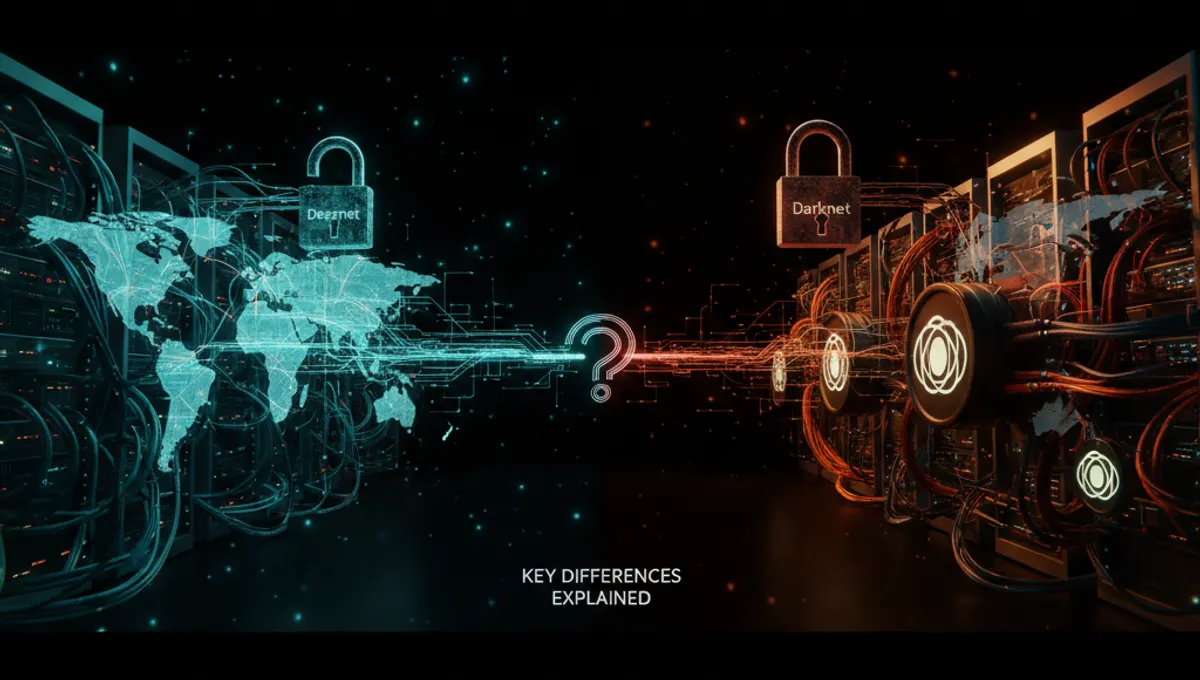
Deep Web vs Dark Web: Key Differences
The deep web comprises roughly 96% of the internet and includes everyday content: your email inbox, banking portals, subscription services, and institutional databases. None of this requires special software to access. The dark web, by contrast, is intentionally obscured and requires Tor Browser or similar anonymity tools. It represents a tiny fraction of the internet but attracts attention because it hosts both legitimate privacy-focused communities and illegal marketplaces. Conflating the two leads to unnecessary fear. Most deep web content is mundane and legal. The dark web's anonymity serves journalists, activists, and privacy advocates, though bad actors exploit it too.
Surface Web, Deep Web, and Dark Web Layers
Think of the internet in three layers. The surface web is what Google indexes—public websites, news sites, social media. The deep web sits beneath, containing protected content requiring authentication: medical records, legal documents, academic journals behind paywalls. The dark web exists within the deep web but is deliberately hidden and requires specific software. Each layer serves different purposes. Surface web content is discoverable and public. Deep web content is private but accessible to authorized users. Dark web content is encrypted, routed through multiple servers, and designed for anonymity. Understanding these distinctions prevents confusion when researching online privacy or accessing legitimate hidden services.
Best Deep Web Directories and Search Engines
The best deep web resources depend on your needs. For academic research, institutional repositories and library databases provide peer-reviewed journals and theses. For privacy-focused communication, encrypted email services and messaging platforms operate on the surface web but prioritize security. On the dark web, directories like the Hidden Wiki catalog .onion sites organized by category. Search engines designed for Tor, such as Ahmia and Torch, index dark web content. These tools help users find legitimate services: privacy forums, news outlets, whistleblowing platforms, and technical documentation. Quality varies significantly. Many directories are outdated or contain unreliable links. Verify sources before accessing any site.
Accessing Dark Web Sites Safely via Tor Browser
Tor Browser is the standard tool for accessing dark web content. Download it from the official Tor Project website, not third-party sources. Install it like any application, then launch it. Tor routes your traffic through multiple encrypted relays, masking your IP address and location. When accessing .onion sites, remember that anonymity cuts both ways—legitimate users and bad actors both use Tor. Never maximize your browser window, as this can reveal your screen resolution and compromise anonymity. Disable JavaScript if possible. Don't open multiple tabs simultaneously on different .onion sites. Use a dedicated device or virtual machine if accessing sensitive content. Keep Tor Browser updated. These practices protect your privacy and security.
Legitimate Uses of the Dark Web
The dark web hosts valuable resources beyond its notorious reputation. Journalists use it to receive anonymous tips from sources in repressive countries. Activists organize politically sensitive campaigns without surveillance. Whistleblowers share evidence of wrongdoing through platforms designed for secure document submission. Researchers study internet privacy and security. Privacy advocates maintain forums discussing encryption, digital rights, and surveillance resistance. Libraries and archives preserve information in countries with censorship. These uses demonstrate that dark web anonymity serves important functions. The same technology that enables privacy also enables illegal activity, but the existence of bad uses doesn't negate legitimate ones. Context matters when evaluating any tool or platform.
Top Deep Web Resources for Research
Legitimate deep web research starts with institutional access. Universities provide access to academic databases like JSTOR, ProQuest, and specialized repositories. Public libraries offer free access to many databases. Government agencies maintain databases of regulations, patents, and public records. Medical professionals access clinical databases and research repositories. Legal professionals use case law databases and legal research platforms. These resources require authentication but are entirely legal and commonly used. For dark web research, academic papers on privacy, cryptography, and network security are available through legitimate channels. The Hidden Wiki and similar directories catalog educational content about internet privacy. Approaching the deep web and dark web with research goals rather than curiosity about illegal content leads to productive, safe exploration.
Privacy Considerations and Legal Awareness
Accessing the deep web or dark web is legal in most countries. Using Tor Browser is legal. However, what you do while online remains subject to law. Accessing illegal content, purchasing contraband, or engaging in fraud carries legal consequences regardless of anonymity tools. Law enforcement agencies have successfully prosecuted dark web users by combining technical investigation with traditional detective work. Your ISP can see that you're using Tor, though they can't see your traffic. Some countries restrict Tor access. Before exploring, understand your local laws and the risks involved. Use strong passwords, enable two-factor authentication where available, and maintain operational security. Treat the dark web like any unfamiliar environment: proceed cautiously, verify information, and avoid unnecessary risks.
Frequently asked questions
Is accessing the deep web or dark web illegal?
Accessing the deep web and dark web is legal in most countries. Using Tor Browser is legal. However, illegal activities conducted online remain illegal regardless of anonymity tools. What matters is your conduct, not the technology you use to access content.
What's the difference between the deep web and dark web?
The deep web includes all internet content not indexed by search engines—email, banking, paywalled databases. The dark web is a small encrypted portion deliberately hidden, requiring Tor or similar tools. The deep web is mostly mundane and legal. The dark web is designed for anonymity and hosts both legitimate and illegal content.
How do I safely access .onion sites?
Download Tor Browser from the official Tor Project website. Never maximize your browser window. Disable JavaScript if possible. Don't open multiple tabs on different .onion sites simultaneously. Keep Tor Browser updated. Use a dedicated device or virtual machine for sensitive access. Verify links before clicking them.
What legitimate resources exist on the dark web?
The dark web hosts privacy forums, news outlets, whistleblowing platforms, and technical documentation. Journalists receive anonymous tips. Activists organize politically sensitive campaigns. Researchers study internet privacy. These uses demonstrate that dark web anonymity serves important functions beyond illegal activity.
Can I be traced while using Tor Browser?
Tor provides strong anonymity by routing traffic through multiple encrypted relays. However, law enforcement has successfully prosecuted dark web users through technical investigation combined with traditional detective work. Your ISP can see you're using Tor but not your traffic. Maintain operational security and understand the risks.